 by
by Choosing the right cricket bat by age and height is one of the simplest decisions that can make the biggest difference to a player’s technique, confidence, and long‑term development; in this guide I’ll walk you through a clear, practical size chart, explain how to test swing and weight, and share pro tips from years of coaching and fitting bats so you can pick a bat that helps the player improve safely and quickly.
Contents
Why Size Matters?
A correctly sized bat improves timing, reduces injury risk, and speeds skill development. Length affects reach and stance; weight affects control and power. For juniors, a slightly lighter bat helps develop technique; for adults, balance and pick-up matter more than absolute weight.
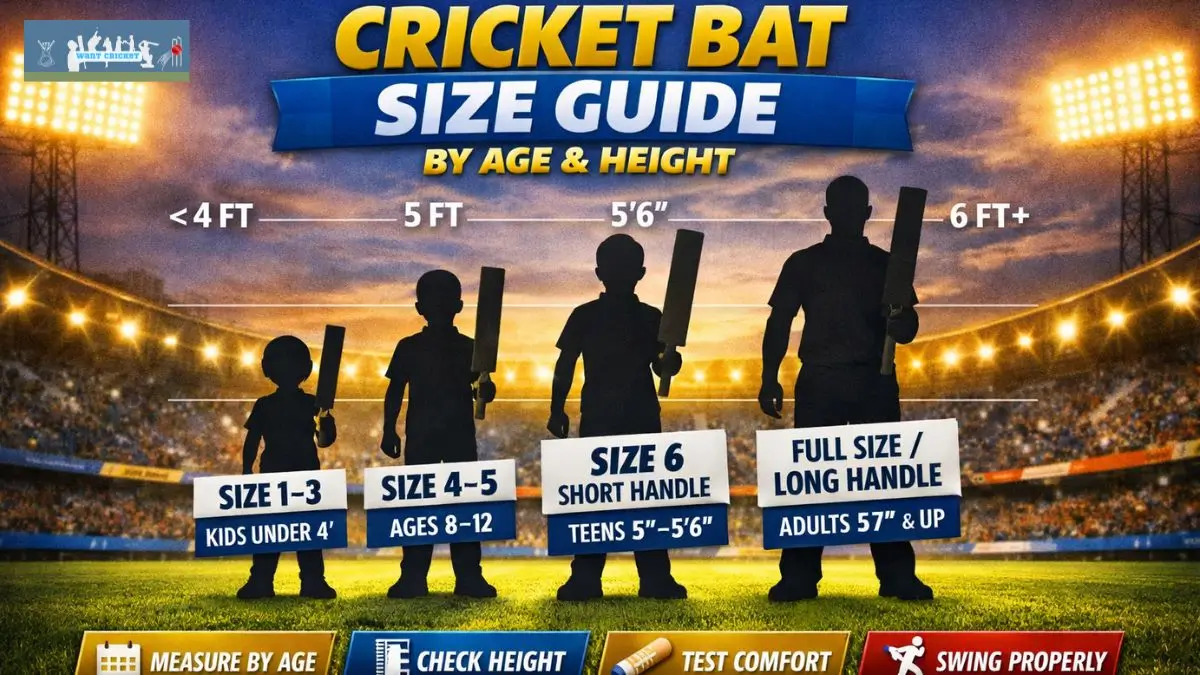
Standard Cricket Bat Sizes By Age and Height
| Bat Size | Typical Age | Approx Height | Use case |
|---|---|---|---|
| Harrod / Size 0 | Under 5 yrs | < 100 cm | Toy/early play |
| Size 1 | 5–7 yrs | 100–115 cm | First wooden bats; light practice |
| Size 2 | 6–8 yrs | 110–125 cm | Junior coaching; tennis‑ball cricket |
| Size 3 | 8–10 yrs | 120–135 cm | School cricket; stronger juniors |
| Size 4 | 10–12 yrs | 130–145 cm | Competitive junior cricket |
| Size 5 | 12–14 yrs | 140–155 cm | Tall juniors / small adults |
| Short Handle (SH) / Full Size | 15+ yrs / Adults | >155 cm | Standard adult bats; choose weight |
| Long Handle (LH) | Very tall adults | >185 cm | Extra reach for very tall players** |
(Chart synthesised from manufacturer and retail sizing guidance).
How To Test A Bat — Step‑by‑Step?
- Measure height barefoot and use the chart as a starting point.
- Stand the bat on its toe; the handle should reach the player’s hip for a comfortable grip.
- Swing test: take a full practice swing; the bat should feel balanced and controllable.
- Check weight: juniors often do better with 700–900 g, adults commonly use 850–1150 g depending on style.
Expert Tips From The Crease
As a coach who’s fitted bats for juniors and club players, I always prioritise swing comfort over length. A lighter bat helps young players find timing; a slightly heavier, well‑balanced bat can reward advanced players with more power. Always buy from authorised dealers to avoid mislabelled or counterfeit bats.
Risks, Limitations, and Trade‑offs
- Brand variations: size labels and pick‑up vary by brand; test physically.
- Playing format: tennis/soft‑ball bats differ from hard‑ball willow bats in weight and balance.
- Counterfeits: cheaper bats may be mislabelled or poor quality; verify willow grade and seller credentials.
Buying Checklist
- Measure player height; use the chart.
- Test swing and check pick‑up.
- Confirm weight range suitable for skill level.
- Verify willow grade and authenticity.
- Buy from authorised retailer or official brand store.
Also Read: What Is Grain In Cricket Bat – The Secret Behind Willow Performance & Durability!
Conclusion
Match bat size to the player’s height and age, prioritise swing comfort over length, and buy from trusted brands — this ensures better technique, fewer injuries, and faster progress. Share the player’s exact age and height and I’ll recommend three specific bat sizes and weight ranges tailored to them.