 by
by If you’ve ever watched a Test match unfold, you know the game isn’t just about runs and wickets — it’s about rhythm. Between intense spells of bowling and patient batting, the tea break offers a moment of calm, reflection, and strategy.
As a cricket coach and strategist, I’ve always found the tea break fascinating. It’s not merely a pause for refreshments; it’s a tactical reset. Captains reassess field placements, bowlers recover, and batters plan their next phase. Understanding how long the tea break lasts — and why it’s placed where it is — reveals how Test cricket balances endurance with precision.
Contents
Official Duration and Timing
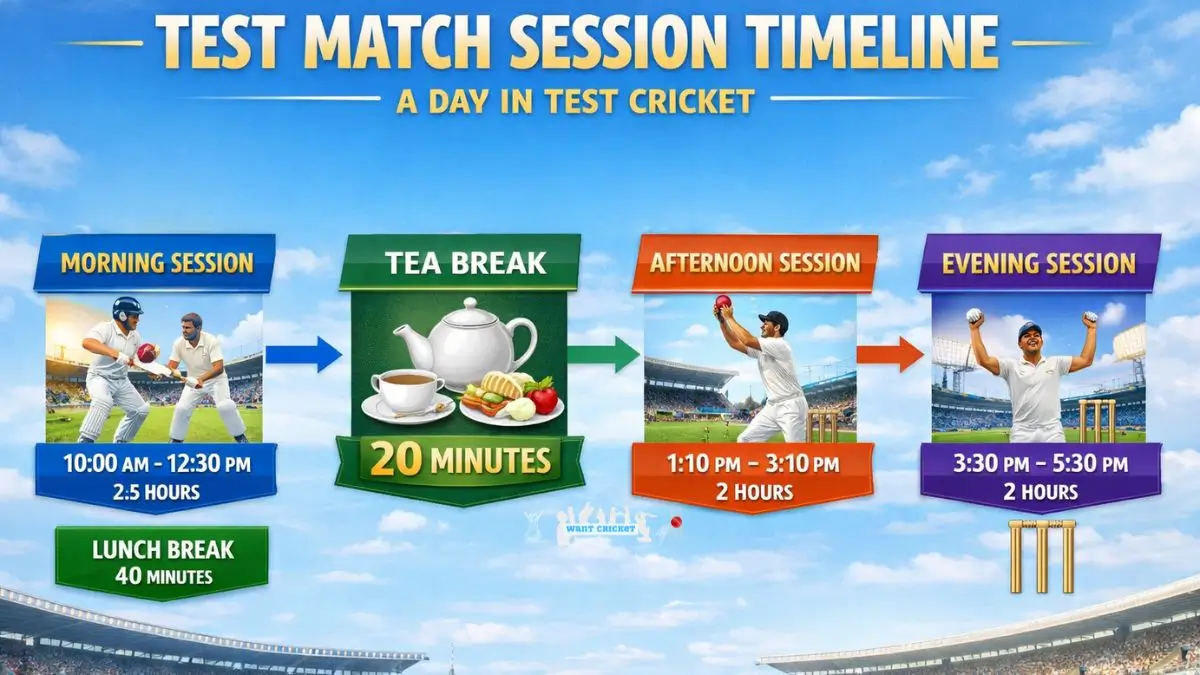
According to ICC Playing Conditions for Test Matches, the tea interval lasts 20 minutes.
- Standard schedule:
- Morning session: Start → Lunch (40 min break)
- Afternoon session: Resume → Tea (20 min break)
- Evening session: Resume → Stumps
| Session | Approx. Time (Local) | Duration | Break Type |
|---|---|---|---|
| Morning | 10:00 AM – 12:30 PM | 2 hr 30 min | Lunch (40 min) |
| Afternoon | 1:10 PM – 3:10 PM | 2 hr | Tea (20 min) |
| Evening | 3:30 PM – 5:30 PM | 2 hr | Stumps |
(Times vary slightly by venue and daylight conditions.)
Why 20 Minutes? The Logic Behind the Interval
- Physical recovery: After nearly five hours of play, players need hydration and light snacks to maintain energy.
- Strategic regrouping: Captains and coaches use the break to plan bowling rotations or batting approaches.
- Broadcast rhythm: The tea break provides a natural slot for analysis and advertisements without disrupting play.
- Tradition: The 20‑minute tea interval has been part of Test cricket since the early 1900s, inherited from English county matches.
Historical Context
The term “tea break” originated in England, where afternoon tea was customary. Early matches at Lord’s and The Oval paused for tea around 3 PM. Over time, the ICC standardized the duration to 20 minutes, balancing tradition with modern scheduling.
Even today, the tea break retains its charm — players often enjoy light snacks, fruits, and isotonic drinks rather than literal tea, but the name remains symbolic of cricket’s heritage.
Personal Insight
From my coaching experience, the tea break often becomes a mental checkpoint. I’ve seen bowlers use it to reset after long spells and batters to refocus after surviving tough sessions. It’s also when teams quietly shift momentum — a well‑timed pep talk can turn a match around.
During one domestic game I coached, our opener had batted through the morning session. At tea, we discussed his fatigue and adjusted his shot selection. He went on to score a century. That’s the unseen power of a 20‑minute pause.
Test vs Limited‑Overs Breaks
| Format | Break Type | Duration | Purpose |
|---|---|---|---|
| Test Cricket | Tea | 20 min | Tactical reset, refreshment |
| Test Cricket | Lunch | 40 min | Full meal, recovery |
| ODI | Mid‑innings break | 30 min | Team switch, analysis |
| T20 | Mid‑innings break | 10 min | Quick turnaround |
| The Hundred / Franchise Leagues | Strategic timeout | 2–5 min | Sponsor‑driven, tactical |
Suggested Visuals
- Infographic: “Timeline of a Test Match Day” — showing morning, afternoon, and evening sessions with breaks.
- Flowchart: “What Happens During Tea Break” — hydration, strategy, media analysis.
- Comparison graphic: “Test vs ODI vs T20 Breaks.”
FAQs – How Long Is Tea Break in Test Cricket
Que 1: Can the Tea Break be Delayed or Shortened?
Ans: Yes. If wickets fall close to the scheduled time or weather interrupts play, umpires may adjust the timing.
Q2: Do Players Actually Drink Tea?
Ans: Not necessarily. Modern players prefer energy drinks, fruits, and protein snacks.
Q3: What happens if a team is nine wickets down at tea?
The break is usually taken immediately unless the innings ends just before tea.
Q4: Is there a tea break in day‑night Tests?
Yes, but it’s often renamed the “dinner break,” lasting 40 minutes instead of 20.
Also Read: Why Cricketers Wear White Clothes in Test Matches — Tradition, Purpose & Symbolism
Conclusion
The tea break in Test cricket lasts 20 minutes, but its significance goes far beyond the clock. It’s a moment of tradition, strategy, and recovery — a bridge between endurance and excellence.
As a cricket expert, I see it as the heartbeat of the afternoon session: a pause that refreshes both body and mind. In a game built on patience and precision, even 20 minutes can change the course of a match.