 by
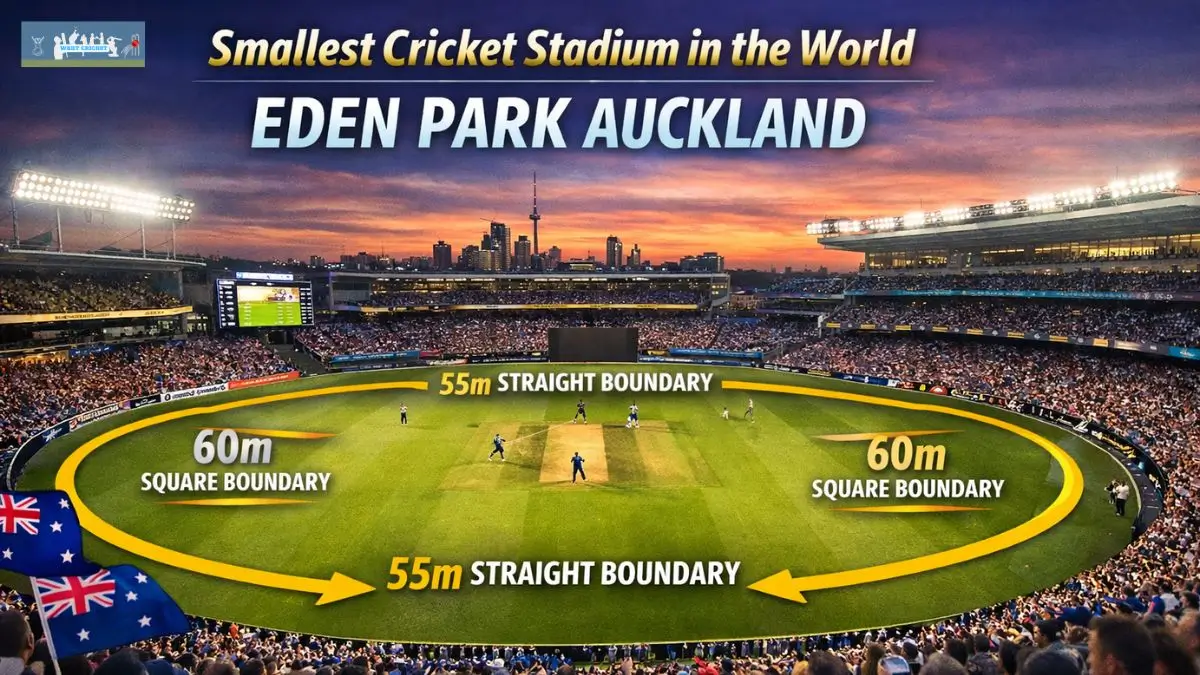
by Cricket is a game of dimensions — pitch length, boundary size, and stadium atmosphere all influence how the sport unfolds. While massive grounds like the Melbourne Cricket Ground test a batter’s power, smaller venues like Eden Park turn every mistimed shot into a potential six.
As a cricket coach and strategist, I’ve always found smaller stadiums fascinating. They challenge bowlers to adapt their line and length and reward batters who can exploit angles. The smallest stadiums in world cricket have produced some of the most thrilling contests, where boundaries blur between skill and spectacle.
Contents
What Defines a “Small” Stadium?
A stadium’s size is measured primarily by boundary length — the distance from the center of the pitch to the rope. The International Cricket Council (ICC) recommends boundaries between 65 and 90 meters, but many older or multi‑purpose venues fall below that range.
Factors influencing stadium size:
- Urban space limitations.
- Multi‑sport design (rugby, football, cricket).
- Historical architecture.
- Local crowd capacity and safety regulations.
Smallest Cricket Stadiums in the World
| Rank | Stadium | Location | Approx. Boundary Size | Capacity | Notable Matches |
|---|---|---|---|---|---|
| 1 | Eden Park | Auckland, New Zealand | 55–60 m | 50,000 | 2015 World Cup NZ vs Aus |
| 2 | The Gabba | Brisbane, Australia | 60–65 m | 42,000 | 2021 India vs Australia Test |
| 3 | Sharjah Cricket Stadium | UAE | 62–65 m | 16,000 | 1998 Desert Storm Series |
| 4 | Queen’s Park Oval | Trinidad | 63–66 m | 20,000 | 2007 World Cup matches |
| 5 | Holkar Stadium | Indore, India | 64–68 m | 30,000 | 2017 India vs Australia ODI |
Why Eden Park Tops the List?
Eden Park’s compact design stems from its dual purpose — it hosts both rugby and cricket. The rectangular rugby layout limits boundary expansion, resulting in short straight boundaries that make it a paradise for batters.
- Pitch behavior: True bounce and pace encourage aggressive stroke play.
- Bowling challenge: Spinners struggle to contain runs; pacers rely on yorkers and variations.
- Fan experience: Every seat feels close to the action, amplifying crowd energy.
Personal Insight
I’ve analyzed matches at Eden Park where even defensive pushes raced to the fence. Bowlers often joke that they need to bowl “inside the rope” to survive. The stadium teaches discipline — bowlers must hit precise lengths, and batters must control their power.
During coaching sessions, I use Eden Park as an example of how ground dimensions influence tactics. A smaller field demands smarter field placements and sharper awareness.
Small vs Large Stadiums
| Aspect | Small Stadium (Eden Park) | Large Stadium (MCG) |
|---|---|---|
| Boundary Size | 55–60 m | 85–90 m |
| Batting Strategy | Power‑hitting, aerial shots | Placement, running between wickets |
| Bowling Approach | Yorkers, slower balls | Short‑pitch, swing and bounce |
| Spectator Experience | Intimate, louder atmosphere | Grand, panoramic view |
| Average Score (ODI) | 300+ | 260–280 |
Other Compact Venues Worth Mentioning
- Feroz Shah Kotla (Delhi, India): Tight square boundaries, ideal for T20s.
- Sabina Park (Jamaica): Small ground but tricky pitch.
- Darren Sammy Stadium (St Lucia): Short straight boundaries, scenic backdrop.
Frequently Asked Questions (FAQs) for the Smallest Stadium in the World
Que 1: Which is the smallest cricket stadium in the world?
Ans: Eden Park in Auckland, New Zealand — boundaries around 55–60 meters.
Que 2: Which is the smallest stadium in India?
Ans: Holkar Stadium, Indore — boundaries around 64–68 meters.
Que 3: Why do smaller stadiums produce high scores?
Ans: Shorter boundaries make fours and sixes easier, encouraging aggressive batting.
Que 4: Are small stadiums harder for bowlers?
Ans: Yes, bowlers must rely on accuracy and variations to avoid being hit.
Also Read: Are Binoculars Allowed in Cricket Stadiums? Fans Shocked by the Rules!
Conclusion
The smallest stadium in the world, Eden Park, proves that size doesn’t limit greatness. Its compact boundaries have witnessed unforgettable matches and record‑breaking performances.
As a cricket expert, I see Eden Park as a reminder that cricket thrives on diversity — from sprawling grounds to intimate arenas. Every stadium tells a story, and Eden Park’s story is one of power, precision, and passion.