 by
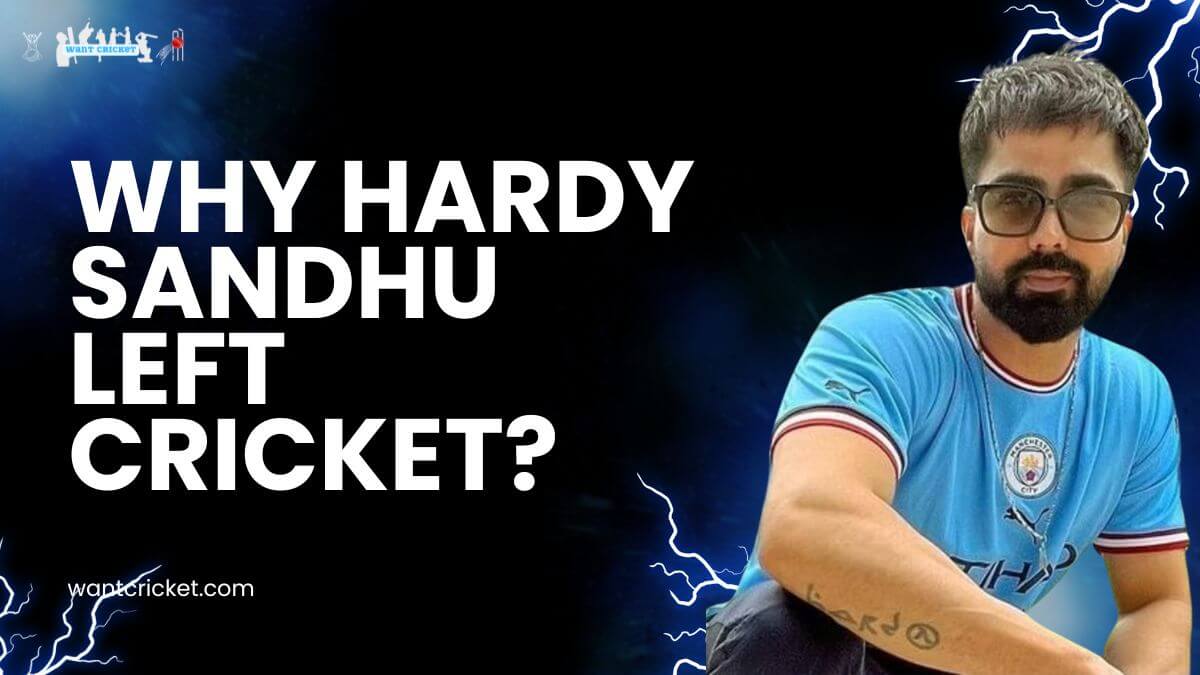
by Hardy Sandhu is a name best known today for his chart-topping Punjabi tracks and charismatic on-screen presence. Yet, before he became a celebrated singer and actor, Hardy—or Hardavinder Singh Sandhu, as he was once known—was a promising cricketer with dreams of representing India on the international stage. In this blog, we explore the poignant journey that led Hardy Sandhu to leave cricket, the challenges he faced with injury, and how fate redirected him from the pitch to the recording studio.
Contents
A Promising Beginning on the Cricket Field
Hardy Sandhu’s cricketing journey began with considerable promise. As a young fast bowler, he rose through the ranks to represent India at the Under-19 level. He had the opportunity to share dressing rooms with future stalwarts such as Shikhar Dhawan, Cheteshwar Pujara, Ishant Sharma, and even Robin Uthappa. His early exposure to competitive cricket, along with appearances for Punjab in the domestic Ranji Trophy during the 2005–06 season, spoke volumes about his potential. In the few first-class matches he played, Sandhu demonstrated his skills by taking 12 wickets at an impressive average, producing statistics that suggested a bright future on the international stage.
The Injury That Altered His Destiny
For any athlete, an injury is more than just physical pain—it can also be a critical turning point. In 2006, while plying his trade as a right-arm fast-medium bowler, Hardy Sandhu suffered a severe elbow injury. This injury struck at the very core of his ability to bowl at pace, and despite his best efforts to recover, the treatment available in India yielded little improvement. In his own words, “kuch hua nahi”—a stark admission that the injury was unresponsive to treatment.
Determined not to let this setback define his career, Sandhu took a bold step. He moved to Australia on a student visa with the hope of finding advanced medical care and physiotherapy. For 11 long months, he sought help from renowned doctors and therapists, but unfortunately, his elbow never recovered to the level required for professional cricket. As the injury persisted, the dream of representing India began to fade, setting the stage for an entirely new chapter in his life.
The Missed Golden Opportunity: IPL and Regrets
As the injury hindered his progress on the cricket field, a new era was dawning in Indian cricket—the Indian Premier League (IPL). Emerging as a revolutionary platform that would redefine T20 cricket, the IPL was capturing the hearts and hopes of millions. Hardy Sandhu has sometimes reflected on the bitter irony of the timing. He felt a pang of regret, knowing that if not for his debilitating elbow injury, he could have been part of this burgeoning cricketing phenomenon. In various interviews, he admitted, “I sometimes regret that I could not play cricket for India,” and these sentiments underline the personal loss of not fulfilling a dream that was well within his grasp.
Reinvention: Embracing a New Passion
With his cricket career stalling and opportunities in the sporting arena slipping away, Sandhu made a life-altering decision. Instead of clinging to a dream crippled by circumstance, he chose to explore another form of expression—music. From a young age, music had always been a close companion to Hardy. When he found himself sidelined by injury, he began to invest more time in honing his musical talents.
In 2012, the transformation was complete with the release of his breakthrough single, “Tequila Shot.” The transition from fast bowler to music sensation wasn’t instantaneous, but it was deliberate. His deep-rooted passion for music, combined with the resilience honed on the cricket field, allowed him to reinvent himself in an industry that was entirely new yet equally challenging. Today, Hardy Sandhu is adored not just for his singing, but also for his contributions to Punjabi cinema, proving that sometimes, unexpected turns can lead to greater fulfillment.
Reflections on a Life of Resilience
Hardy Sandhu’s journey is a vivid reminder of how talent and opportunity can be thwarted by misfortune, and how destiny sometimes nudges us toward uncharted paths. The injury that ended his cricketing days was not just a physical setback; it was a crossroad that forced him to reimagine his future. Though he occasionally laments the cricketing journey he might have pursued—imagining locker rooms with cricketing legends and the roar of an IPL stadium—he has also embraced the path that led him to music and acting.
Today, Hardy’s story resonates with many who have faced unforeseen adversity. His ability to transform personal disappointment into creative excellence is a testament to the enduring human spirit. It underscores a universal truth: sometimes, the end of one dream is simply the beginning of another.
Also Read: Who Is Raghu in Indian Cricket Team: The Man Behind India’s Winning Edge!
Conclusion
Hardy Sandhu’s departure from cricket was not a matter of choice but a consequence of an unyielding injury that altered the trajectory of his life. His early promise on the field, punctuated by moments that could have led him to represent India at the highest level, was forever changed by an elbow injury that defied treatment. Yet from the ashes of a cricketing career that never fully bloomed, Hardy emerged as a dynamic singer and actor—a new kind of star forged in the fires of personal struggle and reinvention.
His journey from the cricket pitch to the spotlight is an inspiring narrative of resilience, adaptation, and the courage to redefine oneself in the face of insurmountable odds.
What are your thoughts on Hardy Sandhu’s incredible transformation? Do you think his story serves as a lesson in turning setbacks into new beginnings? Share your perspectives on adapting to life’s unexpected turns and what dreams you might have had to redefine along the way.