 by
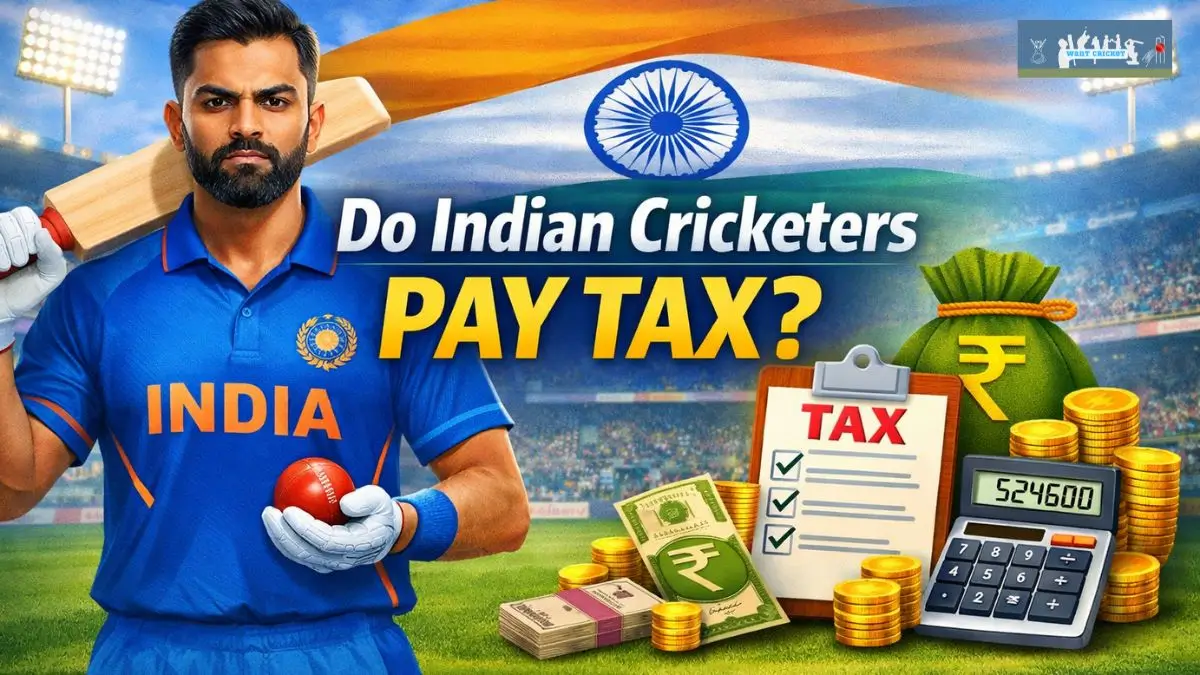
by When fans watch Virat Kohli smashing centuries or Rohit Sharma leading India to victories, the focus is on the field. What often goes unnoticed is the financial discipline required off the field. Cricketers in India earn from multiple sources, and every rupee is accounted for under the country’s taxation system.
As a cricket coach and strategist, I’ve seen young players step into professional cricket with dreams of fame. One of the first realities they face after signing contracts is taxation. Understanding how cricketers pay tax is essential for aspiring players, fans, and anyone curious about the economics of the sport.
Contents
Income Streams of Indian Cricketers
| Income Source | Description | Tax Treatment |
|---|---|---|
| Match Fees | Paid by BCCI or franchise for each match played. | Taxed as professional income. |
| Central Contracts | Annual retainers for contracted players. | Taxed under salary/professional income. |
| Endorsements | Brand deals, advertisements, appearances. | Taxed as business/professional income. |
| Prize Money | Awards from tournaments or sponsors. | Taxed as income from other sources. |
| Investments | Interest, dividends, royalties. | Taxed as income from other sources. |
Tax Structure Explained
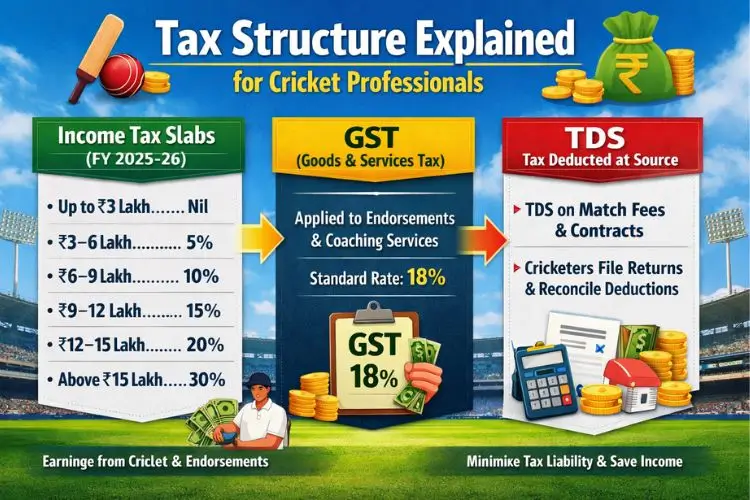
- Income Tax Slabs (New Regime FY 2025‑26):
- Up to ₹3 lakh — Nil
- ₹3–6 lakh — 5%
- ₹6–9 lakh — 10%
- ₹9–12 lakh — 15%
- ₹12–15 lakh — 20%
- Above ₹15 lakh — 30%
- GST (Goods and Services Tax):
- Applied to endorsements, appearances, and coaching services.
- Standard rate: 18%.
- TDS (Tax Deducted at Source):
- Match fees and contracts are subject to TDS.
- Cricketers file returns to reconcile deductions.
Real‑World Examples
- Virat Kohli pays tax on match fees, IPL earnings, and endorsements. His commercial deals are routed through companies for efficiency.
- MS Dhoni has declared income from cricket, endorsements, and investments in his filings.
- Domestic players earning from Ranji Trophy or IPL contracts also file returns once their income crosses the exemption limit.
Cricketers vs Corporate Employees
| Aspect | Cricketers | Corporate Employees |
|---|---|---|
| Income Source | Match fees, endorsements, contracts | Salary, bonuses |
| Tax Head | Professional income | Salary income |
| GST Liability | Yes (endorsements) | No |
| TDS Deduction | Yes (by BCCI/franchise) | Yes (by employer) |
| Tax Planning Tools | Investments, business expenses | PF, HRA, deductions |
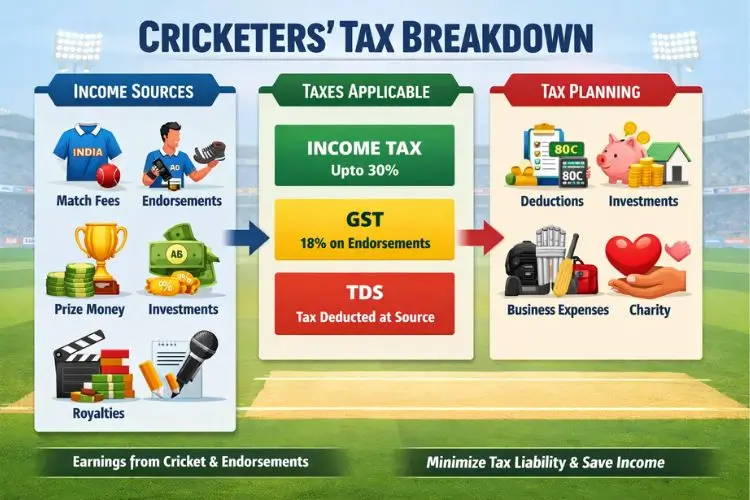
Tax Planning Strategies
- Expense deductions: Travel, equipment, coaching, physiotherapy.
- Investments under Section 80C: ELSS, PPF, insurance.
- Private companies: Many cricketers route endorsement income through companies.
- Charitable donations: Deductions under Section 80G.
Personal Insight
I’ve guided young players who were shocked when their first IPL contract came with heavy TDS deductions. It’s a reminder that professionalism extends beyond the pitch. Financial discipline is as vital as batting technique. Those who plan early secure their future long after retirement.
Frequently Asked Questions (FAQs) For Do Indian Cricketers Pay Tax
Que 1: Do Indian Cricketers Pay Tax on Prize Money?
Ans: Yes, prize money is taxable under “Income from Other Sources.”
Que 2: Are Foreign Players in IPL Taxed in India?
Ans: Yes, they pay tax on income earned in India, subject to Double Taxation Avoidance Agreements.
Que 3: Do Retired Cricketers Pay Tax?
Ans: Yes, on pensions, commentary fees, and business income.
Que 4: Can Cricketers Claim Deductions for Training Expenses?
Ans: Yes, if directly related to their profession.
Also Read: Why Is Cricket So Popular In India: A Deep Dive into Its Enduring Popularity
Conclusion
Indian cricketers pay tax like any other professional. Their earnings from matches, contracts, endorsements, and investments are fully taxable under Indian law. The structure may be complex, but the principle is simple: every income source is accounted for.
As a cricket expert, I believe taxation is part of being a modern athlete. It ensures transparency, financial stability, and respect for the system that supports the sport.