 by
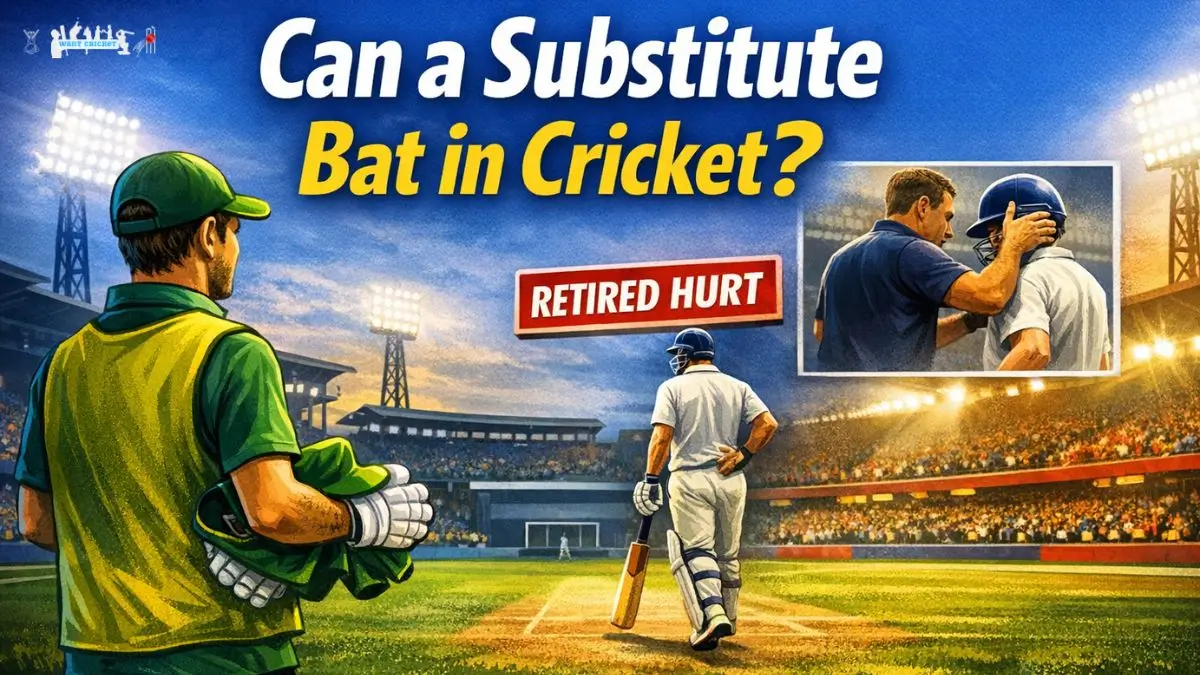
by Cricket is a sport steeped in tradition and governed by detailed laws that define every aspect of play—including the role of substitutes. One question that often arises among fans and newcomers is: Can a substitute bat in cricket? The short answer is no, but there are exceptions worth exploring. In this blog, we’ll break down the rules, exceptions, and real-world examples to give you a complete understanding of this topic.
Contents
What the Laws of Cricket Say
According to Law 24 of the MCC Laws of Cricket, a substitute is permitted only to field in place of an injured or ill player. They cannot bat, bowl, or act as captain. This rule ensures that the integrity of the original playing XI is maintained throughout the match.
Regular Substitute Rules
- Can field
- Cannot bat
- Cannot bowl
- Cannot captain
Substitutes are typically used when a player suffers an injury or illness during the match. They help maintain the team’s fielding strength but do not participate in scoring or bowling.
The Exception: Concussion Substitutes
In 2019, the International Cricket Council (ICC) introduced the concussion substitute rule, a landmark change aimed at prioritizing player safety.
Concussion Substitute Rules
- Can bat
- Can bowl
- Can field
- Must be a like-for-like replacement
- Requires match referee approval
This rule applies across all international formats—Tests, ODIs, and T20Is. The substitute must be approved by the match referee and should ideally match the skill set of the player being replaced.
Real-World Example
During the 2019 Ashes series, Marnus Labuschagne became the first-ever concussion substitute in Test cricket when he replaced Steve Smith. Labuschagne not only batted but made a significant impact, marking a historic moment in cricket’s evolution.
Personal Insight
As a cricket analyst, I’ve seen many fans puzzled when a substitute fielder appears on the ground and then disappears before batting. It’s important to understand that unless it’s a concussion case, substitutes are not allowed to bat. I remember watching Labuschagne walk out to bat in place of Smith—it was a defining moment that showcased how cricket is adapting to modern safety standards while preserving competitive fairness.
Comparison Table: Regular vs Concussion Substitute
| Type of Substitute | Can Bat | Can Bowl | Can Field | Requires Approval |
|---|---|---|---|---|
| Regular Substitute | ❌ | ❌ | ✅ | No |
| Concussion Substitute | ✅ | ✅ | ✅ | Yes |
Also Read: Can a Substitute Bowl in Cricket? Rules Explained
Conclusion
So, can a substitute bat in cricket? No, unless it’s a concussion substitute approved by the match referee. Regular substitutes are only allowed to field and cannot participate in batting or bowling. This rule preserves the fairness of the game while allowing flexibility for player safety.
Substitutes in cricket are field-only replacements, except in concussion cases where full participation is allowed under strict conditions.