 by
by Cricket isn’t just about timing and technique — it’s a sport of explosive strength, endurance, and coordination. Every delivery, shot, and sprint demands a perfect blend of muscle control and body mechanics.
As a coach and player who has spent years in Indian nets, I’ve seen how targeted muscle conditioning transforms performance. The difference between a good player and a great one often lies in how well they train their body to handle the game’s physical demands.
Contents
Key Muscles Used in Cricket
| Muscle Group | Primary Role in Cricket | Training Focus |
|---|---|---|
| Quadriceps & Hamstrings | Power generation during sprinting, bowling run‑ups, and explosive shots. | Squats, lunges, sprint drills. |
| Gluteal Muscles | Stabilize hips and generate lower‑body torque for bowling and batting. | Deadlifts, hip thrusts, resistance bands. |
| Calves | Support quick movements, jumping, and balance during fielding. | Calf raises, plyometric jumps. |
| Core (Abdominals & Obliques) | Maintain posture, rotational power, and balance in all actions. | Planks, Russian twists, medicine‑ball throws. |
| Pectorals & Deltoids | Drive arm movement in batting and bowling; control swing and follow‑through. | Push‑ups, bench press, shoulder press. |
| Latissimus Dorsi & Trapezius | Aid in arm rotation and shoulder stability during bowling. | Pull‑ups, rows, resistance band rotations. |
| Forearms & Wrists | Control grip, spin, and shot placement. | Wrist curls, grip trainers, forearm planks. |
Quick Guide
- Goal: Increase batting power, bowling pace, or fielding explosiveness? Prioritise different muscle groups.
- Time & load: Start with 2–3 strength sessions weekly; add mobility and sprint work.
- Injury history: Address past shoulder, back, or knee issues with a physiotherapist before heavy lifting.
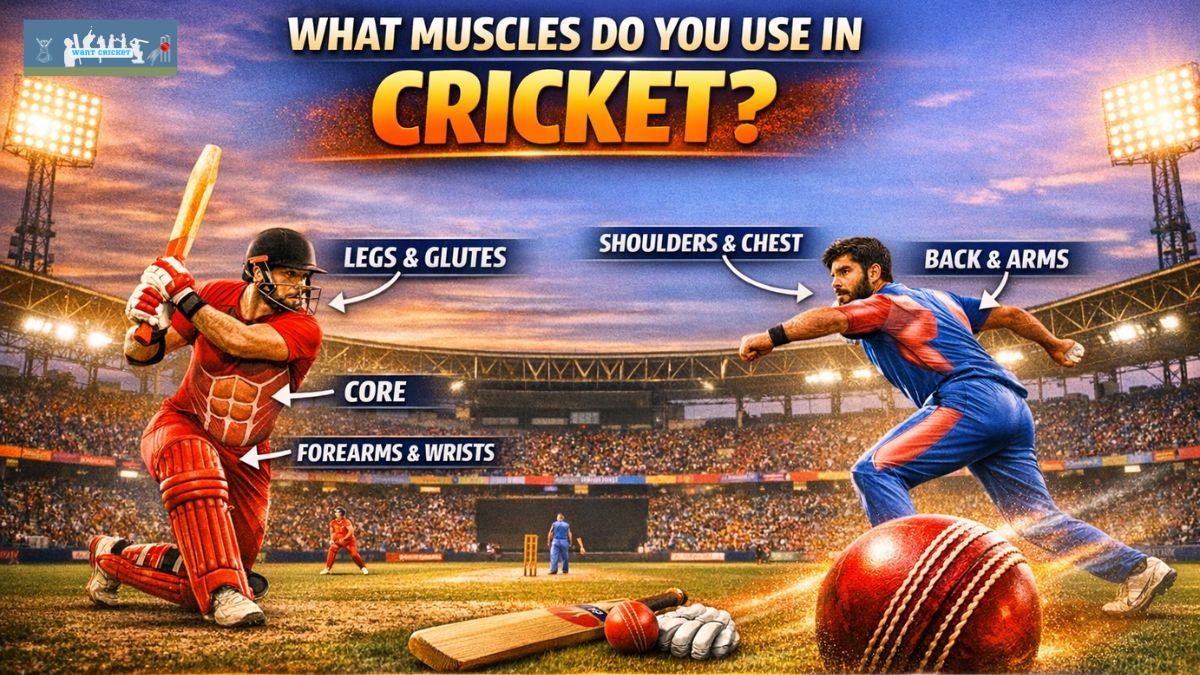
What Muscles Do You Use in Cricket?
Lower body (Power & Sprinting)
- Quadriceps & hamstrings: Drive sprinting, bowling run‑ups and explosive shots. Squats, lunges, and sprint drills are essential.
Posterior Chain (Stability & Torque)
- Gluteus maximus and hamstrings: Generate hip extension and rotational torque for bowling and powerful strokes. Deadlifts and hip thrusts build this chain.
Core (Transfer & Control)
- Rectus abdominis, obliques, erector spinae: Stabilise the trunk, control rotation, and protect the lower back during high‑force actions. Planks, anti‑rotation presses, and medicine‑ball throws improve transfer of force.
Upper Body (Speed & Accuracy)
- Deltoids, pectorals, latissimus dorsi, trapezius: Power the bowling arm and batting follow‑through; rowing and pull exercises enhance shoulder stability. Rotator cuff work is critical to prevent overuse injuries.
Forearms & Grists (Grip & Control)
- Forearm flexors/extensors and wrist stabilisers: Control bat face, spin, and throwing accuracy. Wrist curls, grip trainers, and dynamic catching drills sharpen these muscles.
Functional Movement by Role
- Batting: Leg drive + hip rotation + shoulder extension = power; emphasise unilateral leg strength and rotational core work.
- Fast bowling: Run‑up momentum, braced front leg, and synchronized arm action require coordinated lower body, core, and shoulder strength.
- Fielding/wicket‑keeping: Explosive legs, quick change of direction, and strong forearms for throws and catches.
Batting vs Bowling Muscle Use
| Action | Primary Muscles | Secondary Muscles |
|---|---|---|
| Batting | Core, shoulders, forearms, glutes | Quadriceps, calves |
| Bowling | Hamstrings, glutes, shoulders, core | Trapezius, forearms |
| Fielding | Quadriceps, calves, forearms | Core, shoulders |
| Wicket‑keeping | Glutes, quadriceps, forearms | Core, calves |
Training Priorities and Sample Weekly Split
- 2× Strength (lower body focus): squats, deadlifts, lunges.
- 1× Upper body & shoulder stability: rows, presses, rotator cuff.
- 2× Power & speed: plyometrics, sled sprints, medicine‑ball throws.
- Daily mobility & core: 15–20 minutes.
Risks, limitations, and Injury Prevention
- Overuse injuries (shoulder, lower back) are common without balanced programming; include rotator cuff and posterior chain work.
- Poor technique amplifies injury risk — combine strength work with skill coaching.
Frequently Asked Questions (FAQs)
Que 1: Which muscle is most important for fast bowlers?
Ans: The glutes and core — they generate power and maintain balance during delivery.
Que 2: Do batsmen need strong legs?
Ans: Yes, leg strength supports stability and shot power.
Que 3: How can cricketers prevent muscle injuries?
Ans: Proper warm‑ups, stretching, and recovery routines are essential.
Que 4: Are gym workouts necessary for cricketers?
Ans: Yes, but they should focus on functional strength rather than bodybuilding.
Personal Note
From my coaching experience, players who neglect core and glute training often struggle with balance and back pain. I’ve seen young bowlers improve pace by 5–8 km/h after focusing on posterior chain strength (hamstrings, glutes, lower back). Cricket fitness isn’t about bulk — it’s about functional strength and mobility.
Also Read: How To Start Cricket Career: The Ultimate Guide to Kickstarting Your Cricket Career!
Conclusion
Cricket demands a synergy of muscle groups — legs for power, core for stability, and upper body for precision. Strengthening these areas enhances performance, reduces fatigue, and prevents injuries.
As a cricket expert, I always remind players: train smart, not just hard. The body is your greatest asset — build it for endurance, flexibility, and control.