 by
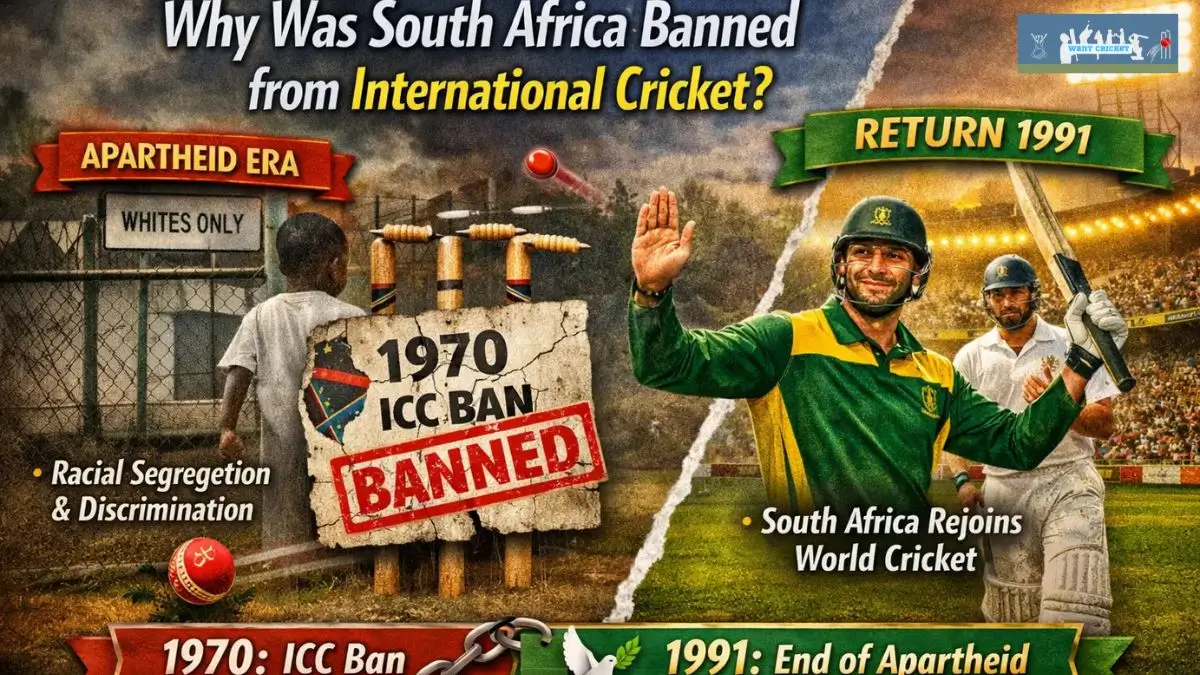
by South Africa’s cricketing exile remains one of the most significant chapters in sports history. The ban wasn’t about cricketing performance—it was about human rights and equality. The apartheid regime, introduced in 1948, institutionalized racial segregation, denying non-white citizens equal rights and opportunities, including participation in sports.
Contents
The Root Cause: Apartheid Policy
Under apartheid, South Africa’s government enforced strict racial divisions. In cricket, this meant:
- Separate teams for white and non-white players.
- Restrictions on mixed-race competitions.
- Prohibition of non-white players representing South Africa internationally.
By the late 1950s, these policies drew global condemnation. The National Party’s racial laws extended even to sports, prompting widespread protests and boycotts.
The ICC Ban in 1970
In 1970, the International Cricket Council (ICC) officially suspended South Africa from international cricket. The decision followed mounting pressure from other nations and activists who opposed racial discrimination.
- The ban was part of a broader sporting boycott against apartheid South Africa.
- It aimed to isolate the country until it reformed its racial policies.
- The suspension lasted 21 years, effectively removing South Africa from all international competitions.
Global Impact and Sporting Boycott
The ban was not limited to cricket. South Africa faced boycotts across multiple sports:
- Olympics: Expelled from the International Olympic Committee in 1970.
- Rugby and Football: Denied participation in global tournaments.
- Public Protests: Anti-apartheid movements in countries like India, England, and Australia demanded justice and equality.
These actions symbolized the world’s united stand against racial injustice.
Personal Insight
As someone who’s studied cricket’s evolution, I view South Africa’s ban as a turning point. It showed how sport can transcend boundaries and become a tool for social change. When South Africa returned in 1991, led by Clive Rice and later Hansie Cronje, it wasn’t just a comeback—it was a symbol of reconciliation and unity.
The End of Apartheid and Reinstatement
In 1991, after apartheid laws were repealed and democratic reforms began, the ICC lifted the ban. South Africa played its first official international match against India in Calcutta (now Kolkata) on November 10, 1991. This marked the beginning of a new era—one where cricket became a platform for diversity and equality.
Timeline Summary
| Year | Event | Impact |
|---|---|---|
| 1948 | Apartheid introduced | Racial segregation institutionalized |
| 1970 | ICC bans South Africa | Isolation from international cricket |
| 1976 | Global sporting boycotts intensify | Pressure on South African government |
| 1991 | Ban lifted | South Africa returns to international cricket |
Also Read: Where Did Cricket Originated? History of Cricket Explained
Conclusion
South Africa’s cricket ban was a moral stand against racial injustice. It reminded the world that sports and ethics are inseparable. The 21-year isolation paved the way for a more inclusive and united cricketing community.
The ban wasn’t just a punishment—it was a global message that equality must prevail, both on and off the field.