 by
by Cricket thrives on precision — a game where inches and seconds decide outcomes. Amid the roar of the crowd and the tension of competition, one figure stands calm and decisive: the main umpire.
As a cricket coach, I’ve often admired how the main umpire manages pressure. Every ball demands focus, every appeal tests judgment. Their duties go far beyond raising a finger; they uphold the spirit and fairness of the game.
Contents
Core Duties of the Main Umpire in Cricket
| Duty | Description | Example in Play |
|---|---|---|
| Decision Making | Rules on LBW, bowled, caught, and run‑outs at the bowler’s end. | Declaring a batter out LBW after assessing line and impact. |
| Monitoring Deliveries | Tracks balls per over, checks for no‑balls and wides. | Signaling a front‑foot no‑ball. |
| Pitch & Light Assessment | Ensures conditions are safe for play. | Suspending play due to poor light. |
| Communication | Coordinates with square‑leg umpire and scorers. | Confirming a run‑out decision or boundary. |
| Fair Play Enforcement | Maintains discipline and adherence to Laws of Cricket. | Warning bowlers for running on the pitch. |
| Time Management | Controls intervals, over rates, and match timing. | Calling drinks or lunch breaks. |
| Technology Coordination | Refers close calls to the third umpire. | Using DRS for edge or run‑out reviews. |
Expert Insight
From my coaching experience, the main umpire’s concentration is unmatched. I’ve seen umpires stand for hours, maintaining composure through appeals and pressure. Their ability to stay neutral and decisive is what keeps cricket credible.
During a local tournament, a young umpire once overturned his own decision after consulting the square‑leg umpire — a rare but commendable act of integrity. That moment taught players the value of honesty in cricket.
Key Responsibilities Explained
1. Decision Making
The main umpire decides on dismissals like bowled, LBW, caught behind, and run‑outs at the non‑striker’s end. They must interpret the Laws of Cricket accurately and instantly.
2. Monitoring the Bowler’s End
They check the bowler’s front foot for no‑balls, ensure fair delivery, and track the number of balls per over.
3. Pitch and Light Conditions
Safety is paramount. The main umpire assesses whether the pitch or light is suitable for play, especially in Tests where natural light varies.
4. Communication and Coordination
They signal decisions clearly to scorers and collaborate with the square‑leg umpire for run‑outs and stumpings.
5. Maintaining Discipline
The main umpire enforces player conduct, warns for time‑wasting, and reports breaches to the match referee.
6. Technology Use
Modern cricket relies on DRS and third‑umpire reviews. The main umpire initiates these when necessary, ensuring transparency.
Main Umpire vs Square‑Leg Umpire
| Aspect | Main Umpire | Square‑Leg Umpire |
|---|---|---|
| Position | Bowler’s end | Square‑leg |
| Primary Focus | Deliveries, LBW, bowled | Run‑outs, stumpings |
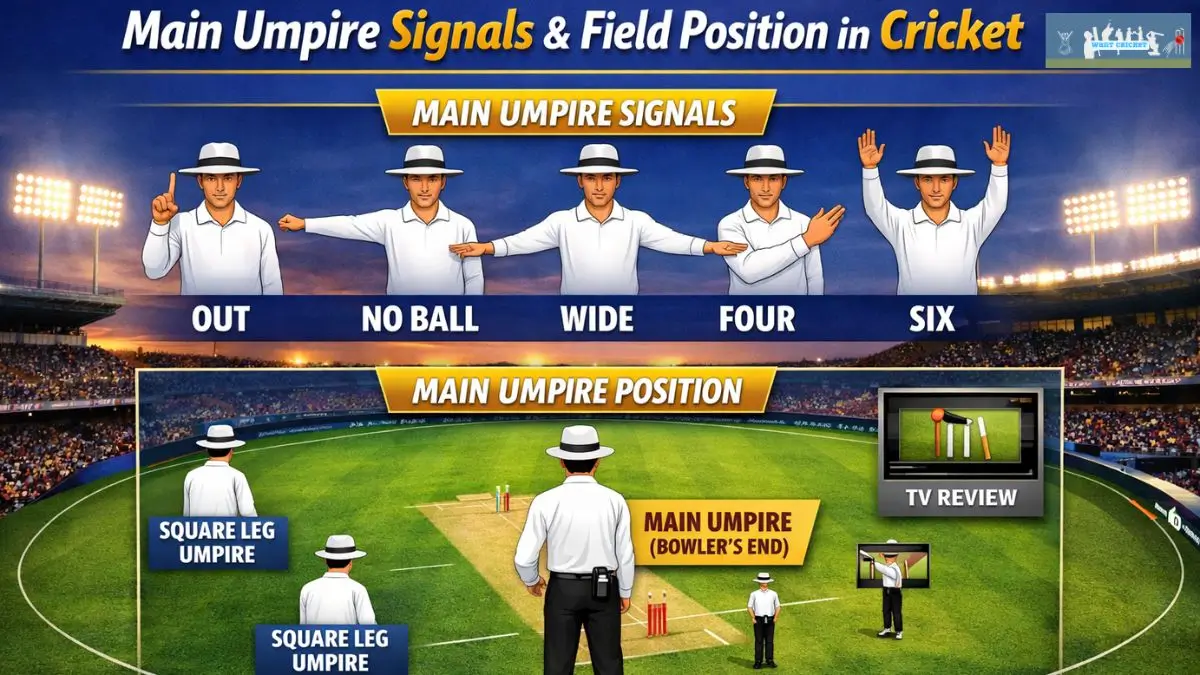
| Signals | No‑ball, wide, out | Boundary, short run |
| Technology Use | Refers DRS | Confirms field decisions |
| Interaction | With scorers and players | With fielders and runners |
Frequently Asked Questions (FAQs)
Que 1: Who is the main umpire in cricket?
Ans: The umpire standing at the bowler’s end — responsible for key decisions and match control.
Que 2: How does the main umpire signal a no‑ball?
Ans: By extending one arm horizontally.
Que 3: Can the main umpire overrule the square‑leg umpire?
Ans: Yes, if the decision falls under their jurisdiction, but usually they consult before finalizing.
Que 4: What technology assists the main umpire?
Ans: DRS, ball‑tracking, and slow‑motion replays via the third umpire.
Also Read: Leg Umpire Rules in Cricket – Duties, Signals & Responsibilities Explained
Conclusion
The main umpire is the backbone of cricket’s fairness. Their duties — from judging LBWs to managing match flow — demand precision, patience, and integrity.
As a cricket expert, I believe the main umpire’s role teaches every player a vital lesson: discipline defines greatness. Their calm authority ensures that cricket remains not just a sport, but a gentleman’s game.