 by
by Every cricket match has heroes with bat and ball, but the game would collapse without the quiet authority of the umpire. Their raised finger can silence a stadium, their calm presence can defuse tension, and their judgment ensures the spirit of cricket is upheld.
As a coach, I often remind players that respecting the umpire is as important as respecting the game. Their duties go far beyond decisions — they embody fairness, discipline, and tradition.
Contents
Core Duties of the Umpire in Cricket
| Duty | Description | Example in Play |
|---|---|---|
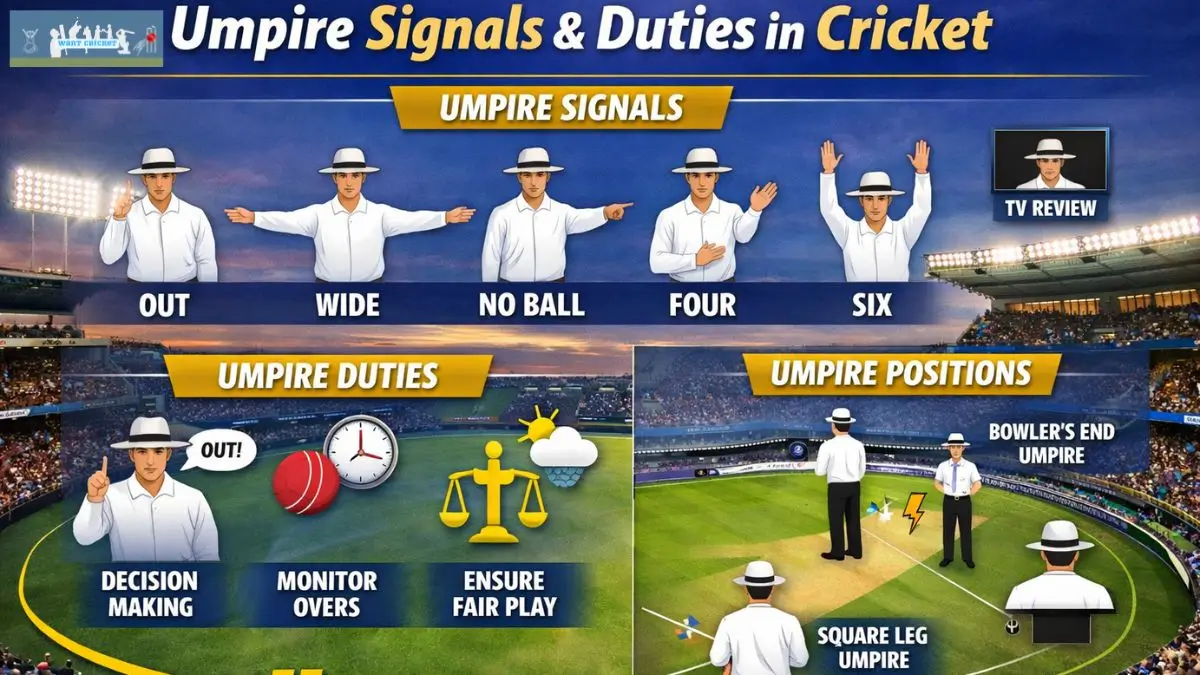
| Decision Making | Adjudicate on dismissals (LBW, caught, run‑out, stumped). | Declaring a batsman out LBW after careful judgment. |
| Monitoring Overs | Keep track of balls bowled, overs completed, and breaks. | Signaling end of over and tea/lunch intervals. |
| Fair Play Enforcement | Ensure players follow Laws of Cricket and spirit of the game. | Penalizing time‑wasting or unfair tactics. |
| Safety Oversight | Assess pitch, weather, and light conditions. | Calling off play due to poor visibility. |
| Signals & Communication | Use hand signals to convey decisions to scorers and players. | Signaling four runs with arms outstretched. |
| Discipline Management | Handle player disputes, sledging, or misconduct. | Reporting players for code of conduct breaches. |
| Collaboration | Work with fellow umpires and match referees. | Consulting third umpire for close run‑outs. |
Types of Umpires in Cricket
- On‑field Umpires (2): Stand at the bowler’s end and square leg.
- Third Umpire: Uses technology (DRS, TV replays) for close calls.
- Match Referee: Oversees conduct, discipline, and match regulations.
Expert Insight
From my coaching experience, I’ve seen how a single umpiring decision can shift momentum. In junior matches, players often argue over dismissals, but I remind them that the umpire’s word is final. Respecting their authority builds discipline and maturity.
Umpire vs Referee Duties
| Aspect | Umpire | Match Referee |
|---|---|---|
| On‑field Role | Direct decisions on play | No on‑field presence |
| Technology Use | Third umpire reviews | Oversees DRS protocols |
| Discipline | Immediate warnings | Formal sanctions |
| Focus | Laws of Cricket | Spirit and conduct |
Frequently Asked Questions (FAQs)
Que 1: What is the most important duty of an umpire?
Ans: Ensuring fair play and accurate decisions.
Que 2: Can players challenge umpire decisions?
Ans: Yes, through DRS (Decision Review System).
Que 3: Who appoints umpires for international matches?
Ans: The ICC Elite Panel of Umpires.
Que 4: Do umpires check player equipment?
Ans: Yes, they ensure bats, balls, and protective gear comply with regulations.
Also Read: Leg Umpire Rules in Cricket – Duties, Signals & Responsibilities Explained
Conclusion
The umpire’s duties in cricket go beyond signaling outs or boundaries. They safeguard the game’s fairness, enforce discipline, and ensure safety. Their role is vital in maintaining the spirit of cricket.
As a cricket expert, I believe every player should understand umpiring duties — not just to respect authority, but to appreciate the balance between competition and fairness that makes cricket unique.