 by
by For newcomers, it’s puzzling to see umpires call wides frequently in ODIs and T20s but rarely in Test matches. The difference lies in the objectives of each format. Limited-overs cricket is designed for entertainment, high scoring, and fairness to batters, while Test cricket emphasizes patience, skill, and tactical depth.
Contents
The Laws of Cricket on Wides
According to the Laws of Cricket, a wide ball is one the batter cannot reasonably reach in their normal stance. This law applies across formats, but interpretation differs:
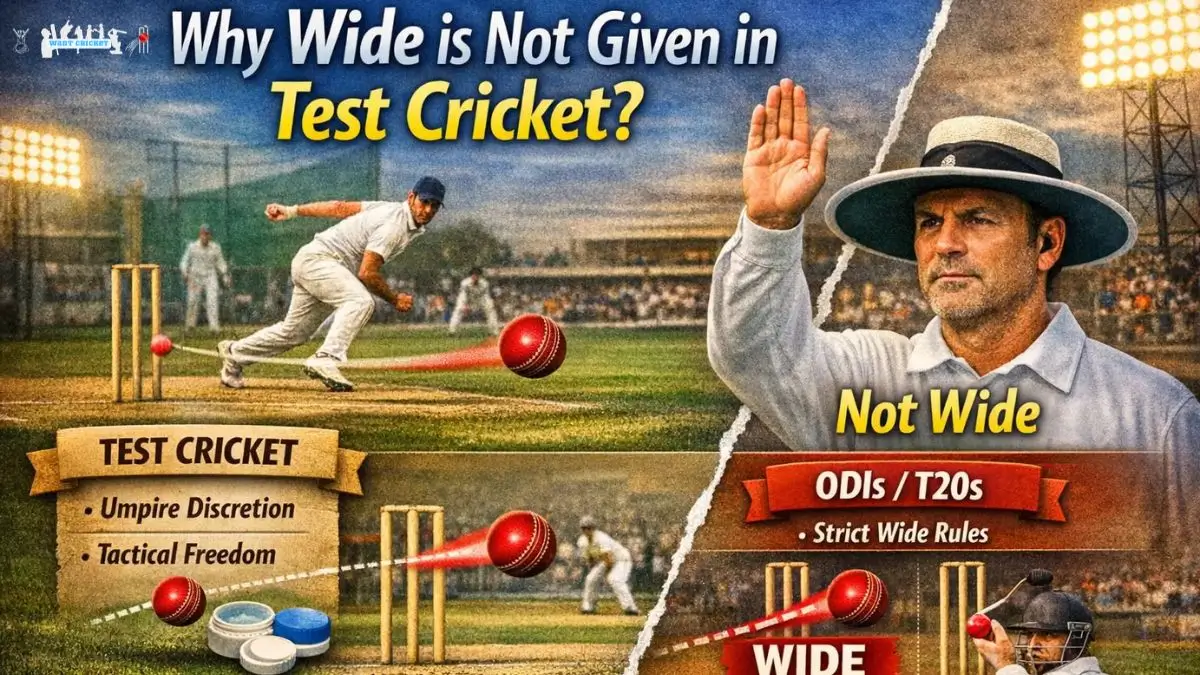
- ODIs/T20s: Strict enforcement to prevent negative bowling and maintain scoring flow.
- Tests: Umpires allow more leeway, especially if the ball passes close to the batter or is part of a tactical plan.
Why Wides Are Rare in Test Cricket
- Format Objectives
- Tests are about attrition and skill, not restricting bowlers.
- Bowlers use wider lines to set traps or test patience.
- Batting Strategy
- Batters are expected to leave balls outside off-stump.
- A wide interpretation would penalize legitimate bowling tactics.
- Game Duration
- With no over-limit, wides don’t affect match tempo as much.
- In ODIs/T20s, wides add runs and extra deliveries, impacting results significantly.
- Umpire Discretion
- Umpires in Tests focus on whether the ball was a genuine attempt to dismiss the batter.
- Only extreme deliveries (far outside reach) are called wides.
Personal Insight
During my time covering domestic matches, I’ve seen bowlers deliberately bowl just outside off-stump to frustrate batters. In limited-overs cricket, those would be wides. But in Tests, they’re considered legitimate tactics. This freedom allows bowlers to build pressure and force mistakes—a hallmark of Test cricket’s charm.
Comparison Table: Wides in Different Formats
| Format | Wide Rule Enforcement | Impact on Game |
|---|---|---|
| Test Cricket | Flexible, umpire discretion | Encourages tactical battles |
| ODIs | Strict enforcement | Maintains scoring pace |
| T20s | Very strict enforcement | Ensures entertainment and fairness |
Risks & Trade-offs
- For Bowlers: More freedom in Tests, but risk of wasting energy with non-threatening lines.
- For Batters: Must judge and leave balls wisely; cannot rely on wides for easy runs.
- For Spectators: Can seem confusing, but adds to the unique rhythm of Test cricket.
Also Read: How Can I Become a Cricketer in India – Complete Guide
Conclusion
Wides are not strictly given in Test cricket because the format values tactical freedom and endurance over scoring pace. While the law exists, its interpretation is looser, allowing bowlers to challenge batters outside off-stump without penalty.
Important Tip: In Tests, patience and judgment replace strict wide rules, making the format a true test of skill.